CAMP at the India Art Summit
Aug. 21, 2009 - Aug. 22, 2009
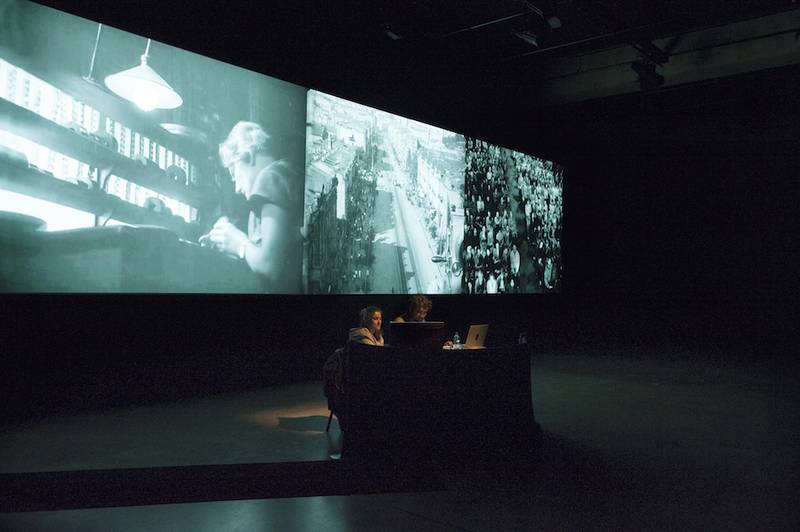
A "Lecture Performance" by CAMP.
Culture erupts in forms, big and small, of exuberance and expenditure. Art is the "profit" or value that occurs when the sum-total of these outward, dissipative, luxurious forces is greater than the inward-pulling logic of nationalisms, identities, collections, or the self-gravity of artists and institutions. CAMP presents a set of expansions on this statement, via an illustrated history of expansion, dissipation, generosity and waste.
Friday, 21 August 2009
Auditorium, Level 1, Hall 8
Pragati Maidan
New Delhi
The idea of expenditure is part of culture-at-large, in which art is no
different from say fireworks or children's toys or weddings or arson.
Expenditure extracts itself from the cycle of production, to release
resources, with or without returns, with or without justification, as
an act of freedom. Expenditure then unleashes a set of forces within a
space, with complex and indeterminate effects, enveloping
participants and spectators. Expenditure involves risks, and the
possibility of entanglements: of being trapped in a death-cycle of the
larger and larger gifts of potlatch, of getting caught up in religious
fervour, of ending in frustrated or willful destruction.
Art has a peculiar capacity to inform the politics of such
expenditure, and to understand its
manifestations: generosity, waste, and power.
Art is the art of liberating expenditure, by exceeding, ignoring or
exhausting its ideologies, by threatening its controlled and ritualised
places with new sites of release. By becoming more than ordinary
expenditure, by overflowing its social mores. By expending immediately
and incrementally rather than by accumulating indefinitely. By
exploiting technological systems to multiply and intensify the acts of
release. Or radically, by spending what one does not have, by
distributing what one does not possess.
The Nine Mores are presented as a set of four pairs and a final (unreturnable) act.
(The relation with Bataille is one of debt, shared laughter, but doubts
about nihilism. The difference is that our ideas here don't rely on a
fundamental, metaphysical excess)