Lost Homeland of Sindh
Dara Shukoh Library
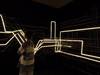
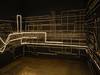
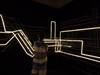
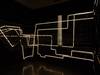
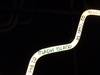
Ulhasnagar Matrix is a permanent installation at the Partition Museum at the Dara Shukoh Library. Other interventions into the Lost Homeland of Sindh gallery include Windows to Sindh and From the Film Archive.
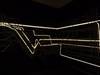
Ulhasnagar Matrix
2024
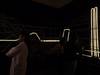
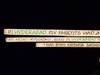
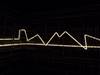
LED profiles, custom electronics, handwritten text.
Ulhasnagar was a World War II military transit camp that housed lakhs of Sindhi and Punjabi Partition refugees, and that quickly developed into a full-fledged city, built over five camps, with its own special urban character. This room consists of journeys of people “via Ulhasnagar”. Patterns of why and where people moved, what they did for work and pleasure, and who followed whom, light up this matrix of movement and individual stories.
We can think of migrations as having a kernel of desire and hope, even in the worst circumstances. Details of why and where people move or stay as they seek better lives, tell us more about the world than simplified histories. Ulhasnagar became a kind of fertile refuge, a camp in which people developed social contacts and survival techniques, and cultivated dreams and desires that carried them elsewhere, kept them in Ulhasnagar, or made them choose or return to this place, later in life. A movement that didnt stop with partition but continued.
By CAMP
With original research and interviews by CAMP and Vandana Govindani, Seema Menghani and Manthan Bachani.
Calligraphy by Gurpreet Kaur.
Special thanks to Dr. Subhadra Anand, Dr Ram Jawhrani, Asha Chand, Peter Dhalwani, Manoj Lassi and the many participants in Ulhasnagar and around the world that we conversed with.
Windows to Sindh
45 mins loop
with Vloggers from Sindh
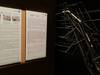
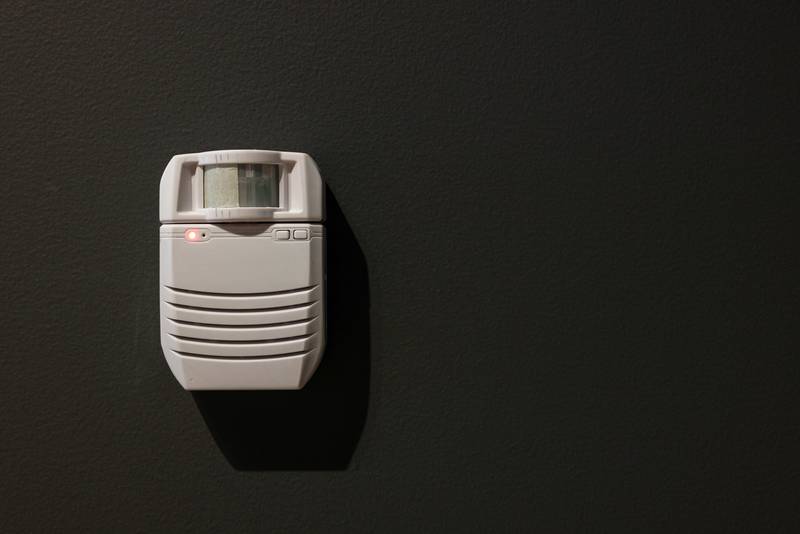
Through the archways of this Muhari or balcony from Shikarpur, we take a low-flying tour through the region of Sindh today, visiting its unique natural landscapes and cities, syncretic religious sites and shrines, ancient, mediaeval and colonial monuments and historical landmarks. A portal to Sindh made possible via the generosity of contemporary vloggers.
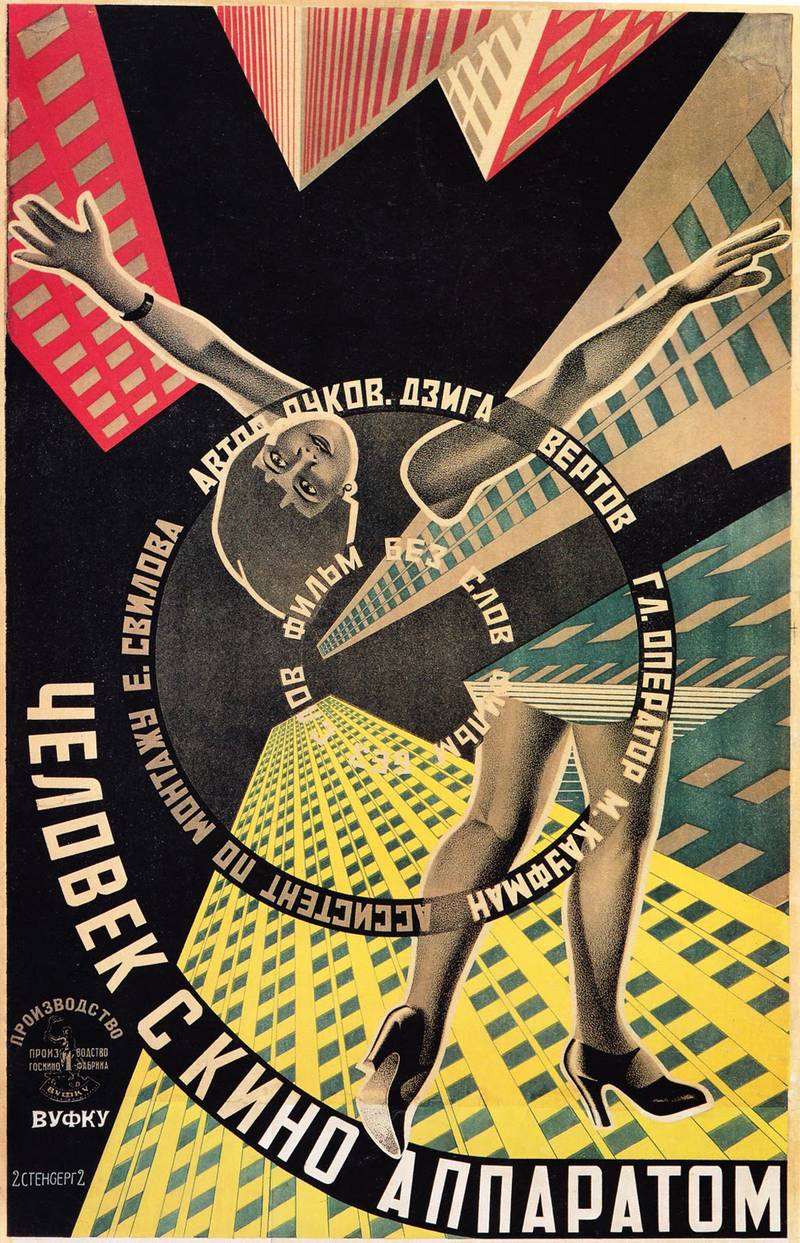
From the Film Archive
20 mins loop
An annotated journey through archival footage, documenting the syncretic traditions of Sindh in the 1930’s, the arrival and settling of Sindhi refugees in India, their literary and cultural events and the movements to recognise Sindhi as a language in the constitution, and to retain the Perso-Arabic Sindhi script. It includes excerpts from the Sindhi language feature film Abana (1958) that includes footage of the migration from Sindh and the “item” song Hede Hede Hede, filmed on location in Ulhasnagar that has people jiving and making light of their “position” in the camps.
as part of
Proposals for a Memorial to Partition
Curated by Murtaza Vali
CAMP draws a series of lines between this and that exhibition. Not only between country A and country
B, or horizontally between peoples or on the plane of "cultural exchanges" or "extra-national space",
but vertically, or diagonally, reaching out to an actual place, to its actual power and presence.
Home for recurring live streaming projects.
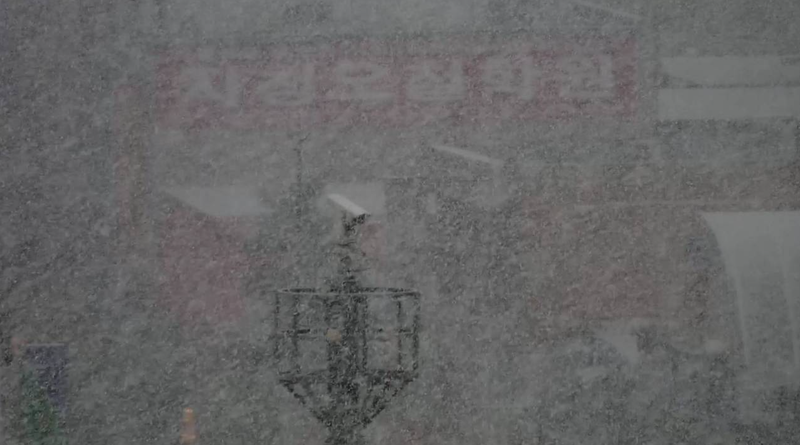
Image: Eulji-ro, Seoul on a wintry day in 2021. Banner for "president -maker", probably a fortune teller.
Months long workshop initiated by a group of artists in and around Delhi.
To use contemporary mediation and media theory as a general phenomenon, to discuss emerging practice and theory, to support each other to produce new work. An online exhibition that uses Pad.ma as a backend.
See new releases of work, and search in time-coded comments made by the group at different stages:
Midsts.with.CAMP
Clips, edits, sirens and phantoms from the annotated archives pad.ma, indiancine.ma and related sites. An invitation to absorb, discuss, navigate and contribute new and old time-based media, in a weekly rhythm. To feel the ideas in them, and their potential in and as art, film, daily life, new theory and use. Without the frameworks of social media ;)
Home page is refreshed every Monday, older weeks remain as long-term references.
Contact and to contribute: emailATphantas.ma
To get notifications on new postings join the (you will be anonymous) telegram channel here.
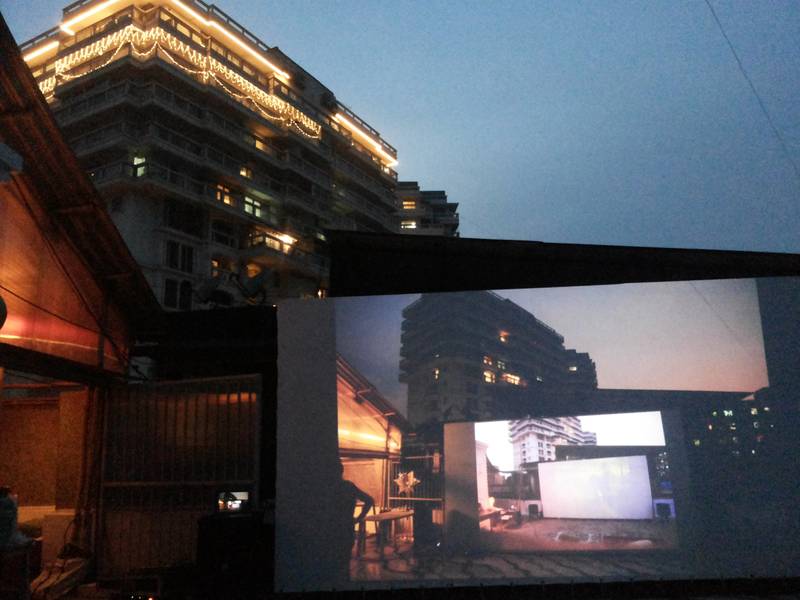
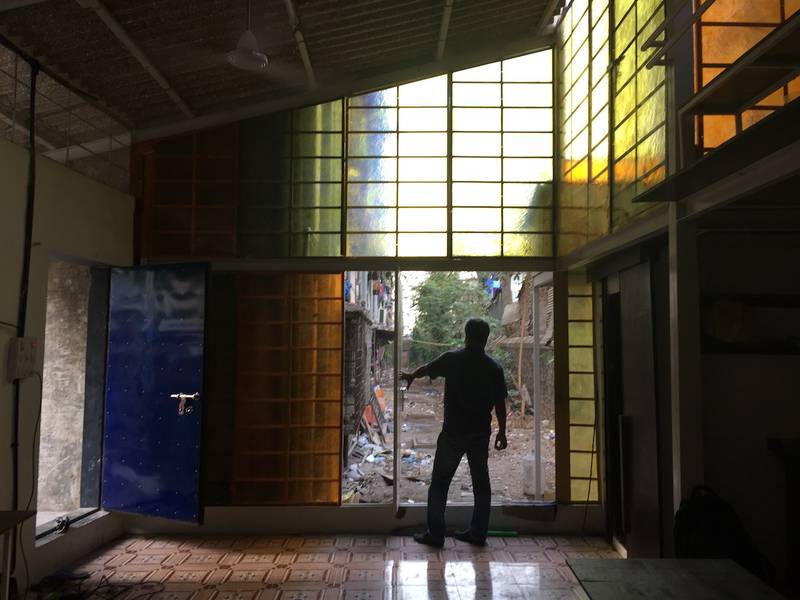
A roof-top venue that has been active since 2007, in this location since 2009.
Video project that takes us on new and recently rebuilt roads in Pakistan, Sri Lanka, the Maldives, and India. Endoscopic views from the interior of the road system, and of the interfaces through which pride, money, data, climate, and vulnerability are connected to it, heighten our sense of developmental possibility, failure, and the deep ambiguity of road achievements.
‘A Passage Through Passages’ is a collaboration with anthropologists, and draws upon ethnographic and archival work in five field sites. This film is part of Roads and the Politics of Thought, a 5-year ethnographic study of road-building in South Asia.
A never-ending project housed at CAMP around peoples histories of Bombay-Mumbai.
The New Medium was a curated programme for the Mumbai International Film Festival for three consecutive years (2016-2018). The inaugural program - in a twisted art-historical mode - framed cinema as a new medium (125 years old, when compared to the other arts), and scoured the century of cinema chronologically...
A space we built and run with others, located in the R and R colony of Lallubhai Compound, Mumbai.
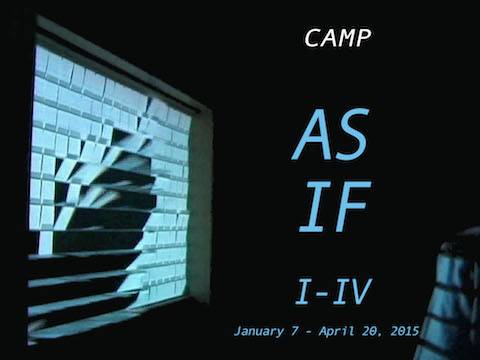
AS IF is a series of exhibitions by CAMP across the winter /spring of 2014-15.
As If (I-V)
As If – I Rock, Paper, Scissors
EXPERIMENTER, Kolkata
January 7 - February 20 2015
As If – II Flight of the Black Boxes
24 JORBAGH, New Delhi
January 27 - February 24 2015
As If – III Country of the Sea
BHAU DHAJI LAD MUSEUM, Mumbai
February 21 - April 7 2015
As If – IV Night For Day
CHEMOULD PRESCOTT ROAD, Mumbai
March 9 - April 30 2015
As If – tV
Clark House Initiative, Mumbai
March 29 - May 20 2015
Pad.ma has a sister project.
Indiancine.ma is an annotated online archive of Indian film.